

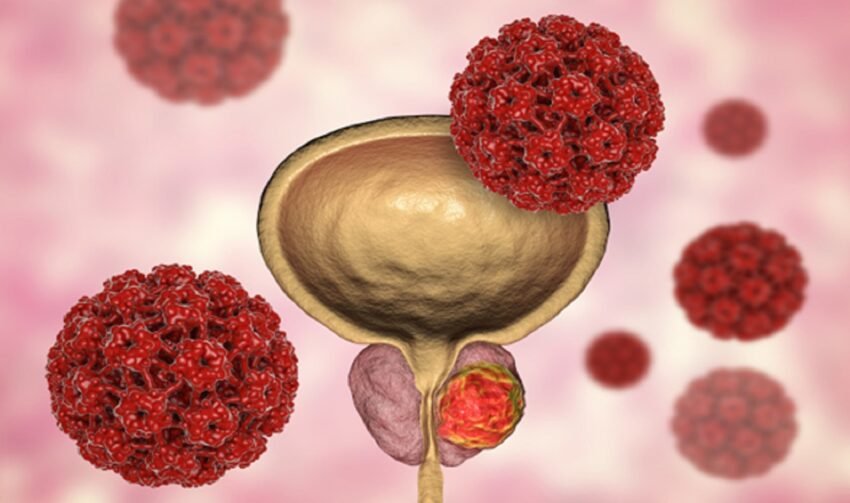
What is malignant prostate cancer? What are the symptoms of malignant prostate cells?
What Is Malignant Prostate Cancer?
Malignant prostate cancer is a type of cancer that develops in the prostate gland and generally progresses slowly. The prostate is an important part of the male reproductive system and is located just below the bladder. Cancer cells can multiply uncontrollably in this gland and form a tumor. If these tumors are not treated in time, they may metastasize to other parts of the body and lead to serious, life-threatening health conditions. Prof. Dr. Hakkı Perk’s clinical work in Ankara has shown that early diagnosis can be life-saving.
Prostate cancer usually affects men over the age of 50 and may not show obvious symptoms in the early stages. For this reason, regular health check-ups and screening tests are critically important for early diagnosis and treatment. Screening methods used in prostate cancer treatment include the prostate-specific antigen (PSA) test and digital rectal examination (DRE). Thanks to these tests, the disease can be detected early and the chance of successful treatment increases significantly. Modern medical technologies and advanced imaging methods increase the accuracy and reliability of the diagnostic process.
Although the exact causes of malignant prostate cancer have not yet been fully clarified, various risk factors have been identified. These include advanced age, genetic predisposition, family history, and lifestyle-related factors. In particular, the risk is higher in individuals with a first-degree relative diagnosed with prostate cancer. In addition, smoking, excessive alcohol use, obesity, sedentary lifestyle, and unhealthy eating habits may also play a role in the development of the disease. Therefore, lifestyle changes such as regular exercise, healthy and balanced nutrition, and avoiding smoking play an important role in reducing the risk of disease. In centers specialized in prostate cancer surgery, successful outcomes are achieved through modern treatment methods.
Treatment Methods Used in Malignant Prostate Cancer

Treatment of malignant prostate cancer includes a variety of different methods. Since every patient’s condition is different, treatment options are determined individually. While creating the treatment plan, the stage of the cancer, the patient’s age, general health condition, and personal preferences are taken into account. The clinical experience of Prof. Dr. Hakkı Perk in Ankara emphasizes the importance of a personalized treatment approach for every patient. The most commonly used treatment options include surgical intervention, radiotherapy, and hormone therapy.
Surgical intervention aims to completely remove cancerous tissue from the body. Within the scope of prostate cancer surgery, prostatectomy involves removing the entire prostate gland. These procedures are performed by experienced surgeons using modern surgical techniques. After surgery, patients are closely monitored during the recovery process and additional treatment may be applied when necessary. Surgery can be an effective option especially for patients with early-stage prostate cancer.
Radiotherapy destroys cancer cells using high-energy beams. In prostate cancer treatment, this method can be used as an alternative to surgery or as an additional treatment after surgery. Modern radiotherapy techniques target cancer cells with maximum precision while preserving healthy tissue. Radiotherapy helps shrink tumors and prevent spreading. Throughout the treatment process, patients are informed in detail about possible side effects and outcomes and are followed closely on a regular basis.
Prostate Cancer Treatment: Surgical Options
In prostate cancer treatment, surgical options vary depending on the stage of the disease and the patient’s overall health condition. Prostatectomy — which involves the removal of the entire prostate gland — is often preferred in early-stage cancers. This procedure can be performed via open surgery or laparoscopic methods. Laparoscopic surgery is a less-invasive approach and allows for faster patient recovery. Modern robotic surgery systems provide surgeons with greater precision and control during operations. Thanks to these technological advancements, postoperative complication risks are minimized, recovery times are reduced, and patient comfort is increased.
Radical prostatectomy — an important component of prostate cancer surgery — is a comprehensive surgical procedure involving the meticulous removal of the prostate gland along with some surrounding tissues. This method is preferred to minimize the risk of the cancer spreading to other parts of the body. After surgery, the recovery process of patients is carefully monitored by expert medical teams, and comprehensive support is provided regarding quality-of-life issues such as urinary control and sexual function.
Minimally invasive surgical techniques are increasingly being used in treatment of malignant prostate cancer. Modern robot-assisted surgery systems enable extremely precise and controlled operations, allowing surgeons to work with millimetric accuracy. Compared with traditional surgery, this advanced method helps patients recover faster and significantly reduces postoperative complications. Robotic surgery technology allows surgeons to operate using much smaller incisions — meaning less postoperative pain and discomfort, and a quicker recovery.
Prof. Dr. Hakkı Perk and Urology Practices in Ankara
Prof. Dr. Hakkı Perk is one of the leading specialists in the field of urology in Ankara. He aims to provide patients with the highest-quality healthcare service by implementing innovative and evidence-based methods in prostate cancer treatment. Modern urology practices in Ankara significantly facilitate the treatment process thanks to advanced technology medical devices and a multidisciplinary approach.
Prof. Dr. Hakkı Perk is an experienced urology specialist who successfully applies a wide range of treatment methods in prostate cancer treatment, including surgical intervention, radiotherapy, and hormone therapy. Individual treatment plans are created by considering each patient’s clinical condition, age, general health status, and lifestyle. Thanks to this personalized approach, patients feel safe during treatment and achieve optimal quality of life. With modern treatment protocols and regular follow-up programs, patients’ recovery processes are closely monitored.
Urology clinics in Ankara provide comprehensive services in prostate cancer surgery and treatment in line with international standards — ensuring that patients benefit from the most up-to-date and effective treatment methods. Prof. Dr. Hakkı Perk and his expert team provide all necessary medical, psychological, and social support during treatment — helping patients maintain a healthy life. A multidisciplinary approach and advanced technology are key factors that increase treatment success. For this reason, for those seeking a reliable center for prostate cancer treatment in Ankara, the clinic of Prof. Dr. Hakkı Perk is an ideal choice.
The Most Effective Treatment Methods for Malignant Prostate Cancer
The most effective methods in treatment of malignant prostate cancer vary depending on the stage of the disease, tumor size, patient’s age, and general health status. In early-diagnosed cases, curative methods such as surgery and radiotherapy yield highly successful results. These methods improve long-term survival and quality of life by ensuring local control of the cancer and preventing its spread.
Hormone therapy is a systemic treatment approach that plays an important role in prostate cancer treatment. This method — used to slow or stop the growth of prostate cancer cells — is generally preferred in advanced cases or in patients who do not respond to other treatment options. Also known as androgen-deprivation therapy, hormone therapy reduces the tumor’s dependence on male hormones such as testosterone — thereby shrinking the tumor and preventing its spread. Modern hormonal treatment options are designed to maximize treatment effectiveness while minimizing side effects. Throughout treatment, PSA monitoring and imaging techniques are used regularly to track the course of disease — and treatment plans are revised when necessary.
Active surveillance is a reliable approach often preferred in low-risk and slow-growing prostate cancer treatment cases. This method involves monitoring patients at regular intervals through PSA tests, physical examinations, and biopsies where necessary — with treatment decisions made based on disease progression. While implementing active surveillance, Prof. Dr. Hakkı Perk develops personalized follow-up programs by considering each patient’s individual risk factors and life expectancy. This approach prevents unnecessary treatment and preserves quality of life — while also avoiding possible side effects. Therefore, individualized treatment strategies are of great importance in treatment of malignant prostate cancer.
Innovative Approaches in Prostate Cancer Treatment
Innovative approaches in prostate cancer treatment in Ankara aim to make the treatment process more effective and comfortable for patients. Immunotherapy strengthens the immune system against cancer cells — helping to control the disease. This advanced method activates the body’s natural defense mechanisms to specifically target and destroy cancer cells. Immunotherapy protocols applied in the clinic of Prof. Dr. Hakkı Perk are planned and implemented in accordance with international medical standards.
Targeted therapies stand out as an important treatment option alongside prostate cancer surgery. These treatments target specific molecules that affect the growth and spread of cancer cells. Modern targeted therapies aim to destroy cancer cells while causing minimal damage to healthy tissue. Performed by expert teams in Ankara, these treatments help achieve better treatment outcomes with fewer side effects.
Another innovative method used in treatment of malignant prostate cancer is photodynamic therapy. This advanced technological approach uses special light-sensitive medications to make cancer cells responsive to light — allowing treatment using controlled light energy. Photodynamic therapy is a minimally invasive method that enables faster patient recovery with fewer side effects. These innovative approaches are expected to become even more widespread in the future — increasing success rates in prostate cancer treatment. With continuous technological improvement and growing clinical experience, treatment methods are becoming increasingly safe and effective.

Diseases and Symptoms Related to Malignant Prostate Cancer
Malignant prostate cancer often does not cause symptoms in the early stages. As Prof. Dr. Hakkı Perk states, early diagnosis can be life-saving. In later stages, some symptoms may occur. These include frequent urination, difficulty urinating, blood in the urine, and erectile problems. In addition, abdominal pain, back pain, and bone pain may also be seen in advanced stages. These symptoms may indicate prostate cancer — but they can also be signs of other medical conditions. Evaluations performed by specialists in Ankara enable early detection of such symptoms.
During the prostate cancer treatment process, other medical conditions associated with the disease must also be evaluated. Benign prostatic hyperplasia (BPH), caused by enlargement of the prostate gland — may lead to urinary obstruction. Although BPH is not cancerous, it may present similar symptoms to prostate cancer. Therefore, a detailed evaluation is required before prostate cancer surgery to ensure correct diagnosis and treatment. BPH can be treated through medication or minimally invasive surgical techniques.
Prostatitis is a condition caused by inflammation of the prostate gland. It may be acute or chronic and may develop due to bacterial infection or other causes. This condition may cause symptoms such as pain, difficulty urinating, and general discomfort. Because prostatitis and malignant prostate cancer may present similar symptoms — medical evaluation is essential for an accurate diagnosis. Treatment of prostatitis may include antibiotics, pain management, and lifestyle modifications depending on the underlying cause.
In the presence of such symptoms, as recommended by Prof. Dr. Hakkı Perk, consulting a urology specialist without delay is extremely important. Early diagnosis and accurate treatment planning play a critical role in the successful management of the disease. In modern medical centers in Ankara, advanced diagnostic methods and treatment options provide patients with comprehensive healthcare.
Psycho-Social Support in Prostate Cancer Treatment
Prostate cancer treatment is not only a physical process — but also a journey with emotional and social dimensions. As emphasized by Prof. Dr. Hakkı Perk, the stress, anxiety, and uncertainty experienced by patients during treatment can be significantly reduced through professional psychological support. Psychotherapy and counseling services help patients cope with emotional challenges while also improving their treatment compliance and motivation. These supportive services play an important role in improving quality of life — especially in patients diagnosed with malignant prostate cancer.
Family support is indispensable during the postoperative period following prostate cancer surgery and throughout the treatment process. Emotional and motivational support from family members increases treatment compliance and accelerates recovery. Family counseling services provided at healthcare centers in Ankara strengthen family communication — helping patients feel safer during treatment. Furthermore, psychological support for family members also ensures that the process progresses in a healthier way for everyone involved.
Support groups are also highly valuable resources for individuals fighting prostate cancer. These groups allow patients to connect with others who have gone through similar experiences — strengthening solidarity and preventing social isolation. Through support groups, patients can exchange practical information about treatment and receive emotional support — while realizing that they are not alone. These groups also allow sharing of strategies aimed at improving quality of life after treatment.
Important Considerations During the Treatment Process
There are many important factors that must be considered during the prostate cancer treatment process. First, attending regular doctor appointments throughout treatment is essential. These visits are performed in order to evaluate the effectiveness of treatment and to manage potential side effects. As Prof. Dr. Hakkı Perk states, participating in all recommended examinations and tests helps ensure smoother treatment progress. Regular monitoring at healthcare centers in Ankara plays a critical role in closely tracking the course of the disease.
Adopting a healthy lifestyle is also important during treatment. A balanced diet, regular exercise, and stress management increase the body’s resistance to cancer. Protein-rich nutrition supports the immune system. Daily walking and light exercise help preserve muscle strength and improve energy levels. In addition, quitting smoking and avoiding alcohol makes treatment of malignant prostate cancer more effective. Healthy lifestyle habits strengthen the patient physically — improving treatment outcomes.
It is also important for patients to feel emotionally strong during treatment. Psychological support after prostate cancer surgery, engaging in hobbies, and participating in social activities may positively affect mental well-being. Creative activities such as art, music, or gardening may help reduce stress and protect psychological health. Spending quality time with loved ones and receiving emotional support may make the treatment journey easier.
Remember — success in prostate cancer treatment requires both physical and psychological strength. Regular doctor follow-ups, healthy lifestyle habits, and strong social support systems are key factors that increase treatment success. Since every patient is different, the treatment plan should be arranged individually and revised when necessary throughout the process.
For more detailed information about prostate cancer treatment or for a professional evaluation, you can contact Prof. Dr. Hakkı Perk and our experienced team in Ankara. Our expert staff carefully evaluates each patient’s situation and develops the most appropriate treatment plan for treatment of malignant prostate cancer. Using modern medical technologies and up-to-date therapeutic approaches, we provide all the medical and psychological support needed to help you regain your health. Our team — specialized in prostate cancer surgery — guides you throughout treatment with the goal of maximizing your quality of life. Do not delay — take action for a healthy future by contacting our clinic and receiving professional medical advice. We are with you at every step for your health.